Educational Trip to Nepal – Responsible Tourism & Learning Opportunities

Introduction: Educational Trip to Nepal

Introduction: Educational Trip to Nepal

A well-designed educational trip to Nepal not only broadens the knowledge of students but also adds realism to their classroom studies. This 17-day guided package is tailored for undergraduate tourism students to explore, understand, and evaluate the real-world scenario of tourism operations.

Unlike regular leisure tourists, scholars will consume tourism products and services while critically observing them through the lens of responsible tourism. The trip bridges theoretical classroom knowledge with practical field exposure, offering insights into how Nepal’s diverse tourism sectors operate. Students will not just be passive visitors but active learners, engaging with local communities, observing tourism businesses closely, and reflecting on both positive and negative practices. This approach allows them to connect global tourism theories with authentic local experiences, making their learning deeply meaningful and transformative.
Educational Trip to Nepal

Educational Trip to Nepal

Responsible Tourism in Nepal

The core of this educational tour in Nepal is to help students understand and evaluate responsible tourism practices. Responsible tourism ensures that tourism products and services provide quality experiences without compromising resources for future generations.

Students will analyze how tourism businesses in Nepal are working to:

  • Minimize negative economic, socio-cultural, and environmental impacts.

  • Generate greater benefits for local communities.

  • Contribute to the conservation of heritage, environment, and culture.

  • Create meaningful experiences for visitors through interaction with locals.

According to the World Tourism Organization (UNWTO), responsible tourism is about making better places for people to live in and better places for people to visit. This hands-on evaluation makes students aware of both positive and negative impacts of tourism operations in real scenarios.

Why Choose Nepal for an Educational Trip?

Nepal is a world-class destination for learning tourism management and responsible practices.

  • Tourism contributes nearly 8% of Nepal’s GDP.

  • Home to Mt. Everest, the birthplace of Lord Buddha, and 10 UNESCO World Heritage Sites.

  • One of the few places where students can witness Royal Bengal Tigers and Asiatic Rhinoceros.

  • A hub for diverse experiences, urban tourism, adventure tourism, wildlife tourism, rural tourism, and cultural tourism.

  • Featured in Lonely Planet’s Top Travel Destinations (2017).

Visiting Nepal during tourism promotion campaigns such as Visit Nepal 2020 shows students how marketing, events, and government efforts shape international perceptions of a destination.

Aim of the Educational Trip to Nepal

The main aim of this educational trip to Nepal is to provide tourism students with real-world learning experiences outside the classroom. By traveling across Nepal, students will observe operations, evaluate practices, and understand the importance of sustainability in tourism.

This journey will help future tourism professionals develop:

  • Awareness of sustainable and responsible tourism.

  • Ability to identify both positive and negative impacts of tourism.

  • Insights into challenges businesses face, such as limited resources, management gaps, or cost pressures.

Objectives of the Educational Tour

  • Evaluate Responsible Practices – Assess how tourism suppliers in Nepal operate sustainably across environmental, socio-cultural, and economic dimensions.

  • Analyze Benefits – Understand tourism’s role in generating economic opportunities, infrastructure, conservation, and cultural exchange.

  • Identify Challenges – Study disadvantages such as seasonality, over-dependence on tourism, cultural clashes, and environmental degradation.

  • Understand Linkages – Examine how tourism practices impact local economies, including leakages and local benefits.

  • Develop Responsible Models – Suggest ways to improve tourism sustainability based on field observations.

Conclusion

An educational trip to Nepal provides a rare opportunity for tourism students to combine academic learning with practical exposure. By studying responsible tourism practices in one of the world’s most diverse destinations, students can gain valuable knowledge to shape their future careers while contributing to sustainable tourism growth..If you’re interested in discovering some of the best attractions to include in your travel plan, check out our guide on 12 Best Places to Visit in Nepal


25 Essential Nepali Language Words and Phrases Every Traveler Must Know for the Best Experience in Nepal

Nepali Language Words and Phrases – An Introduction

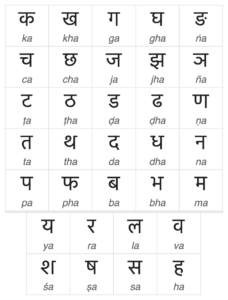
Nepali Language Words and Phrases are an essential part of connecting with the culture and people of Nepal. The Nepali language, written in the Devanagari script, is the official language of Nepal and is spoken by the majority of its population. It belongs to the Indo-European language family and traces its roots to “Khas Bhasha.” Adopted as the official language of the Gorkha kingdom in the 18th century, it continues to serve as a unifying tongue among Nepal’s 120+ ethnic groups.

While English is common in tourist hubs, government offices, and among the younger generation, learning a few Nepali language words and phrases can go a long way. A small effort to greet someone in their language builds trust, eases travel, and enriches your cultural experience.

Nepali Language Words and Phrases

Nepali Language

Why Learn Nepali as a Traveler?

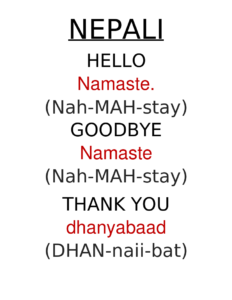
Using even simple Nepali words and phrases creates meaningful interactions. A heartfelt “Namaste” with palms together is more than a greeting, it’s a gesture of deep respect, meaning “I salute the God in you.”

Locals greatly appreciate when foreigners try speaking Nepali. Nepali language words and phrases helps break barriers, makes navigation easier, and leaves you with memorable travel moments. For more details about the Nepali writing system and pronunciation, you can also explore the Nepali Language Guide on Omniglot

Common Nepali Language Words and Phrases for Travelers

Here are some useful Nepali words and phrases for travelers:

Hello – Namaste (said with palms pressed together and it means; “I salute the God in you”)

English Nepali
Thank You Dhanyavād
Yes Ho
No Hoina
Food Khana
Rice and lentils Daal Bhat
Tasty Mitho
It’s tasty Mitho Chha
Tea Chiya
Fruit Phalphul
Meat Masu
Bread Roti
Milk Dudh
Water Pani
Pani Khane pani
Clean Safa
Dirty Phohor
Father Buwa
Mother Ama
Elder sister Didi
Younger sister Bahini
Elder brother Dai
Younger brother Bhai
Friend Sati
What is your name? Tapaiko nam ke ho?
Work Kam
Flower Phul
Medicine Ausaudhi
River Khola
Mountain Himal
Lake Tall
Cold Chiso
Hot Tato
Good Ramro
Beautiful Ramro
Long Lamo
Short Choto
Inside Bhitra
Outside Bahira
Where? Kaha?
Which? Kun?
Now Ahile
Morning Bihana
Night Rati
What time is it? Kati bajyo?
Slow Bistarai
Fast Chhito
Enough Pugiyo
Where is the toilet? Toilet kahan chha?
Where can I stay? Kahan Basne?
Please sit down Basnos
Where are you coming from? Kahan bata aayeko?
Which country are you from? Kun desh bata aayeko?
I am travelling alone Ma ekklai janchhu
Allright Hunchha
Expensive Mahango
Altogether, how much is it? Jamma kati bhayo?
I like Nepal Malai Nepal man parcha
I like you Malai timi man parcha
May I please take a photo of you? Tapaiko photo khichau
I am sick Ma birami chhu
Where is there a hospital? Hospital kaha chha?
Sunday Aaitabar
Monday Sombar
Tuesday Mangalbar
Wednesday Budhabar
Thursday Bihibar
Friday Sukrabar
Saturday Sanibar

Days of the Week in Nepali

English Nepali
Sunday Aaitabar
Monday Sombar
Tuesday Mangalbar
Wednesday Budhabar
Thursday Bihibar
Friday Sukrabar
Saturday Sanibar

Practical Situations Where Nepali Helps

  • At Restaurants – Ordering “Daal Bhat” or asking for water (Khane Pani).

  • While Shopping – Asking “Jamma kati bhayo?” (Altogether, how much?).

  • During Trekking – Greeting locals with “Namaste” or asking “Kaha?” (Where?).

  • In Emergencies – Saying “Ma birami chhu” (I am sick) or “Hospital kahan chha?” (Where is the hospital?).

Nepali Language Words and Phrases

Conclusion

Even though English is widely understood in Nepal’s tourist areas, knowing a few  Nepali words and phrases for travelers can transform your trip. It helps you bond with locals, navigate more smoothly, and show genuine respect for Nepal’s culture. If you’re planning a trek near Kathmandu, don’t miss our detailed guide to Shivapuri Nagarjun National Park, where these Nepali language words and phrases will come in handy. Whether you are trekking in the Himalayas, exploring temples, or sharing tea with a family, speaking Nepali will make your journey unforgettable.

7 Reasons Why Trekking in Nepal is an Unforgettable Adventure

Planning your next adventure? Discover 7 reasons why trekking in Nepal is a once-in-a-lifetime experience. Explore breathtaking trails, Himalayan peaks, culture, and thrill.

Introduction: Why Trekking in Nepal is Special

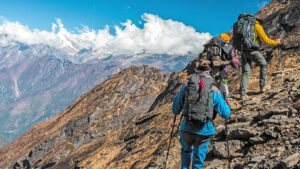
Trekking in Nepal is one of the greatest adventures a traveler can embark on. Imagine walking through steep rocky trails, breathing the fresh mountain air, and gazing at snow-capped Himalayan peaks that shine even at night. Nepal offers not just trekking but a mix of thrill, culture, and natural beauty. Every step here rewards you with unforgettable moments, whether it’s meeting locals in small mountain villages or standing in awe at the world’s tallest peaks.

Nepal is home to eight of the world’s fourteen tallest mountains, including Everest. With such unmatched geography, it has become a hub for trekking, mountaineering, and cultural expeditions. For explorers looking for challenge, peace, and life-changing experiences, Nepal remains at the top of the bucket list.

Trekking in Nepal

World’s Tallest Peaks and Endless Trails

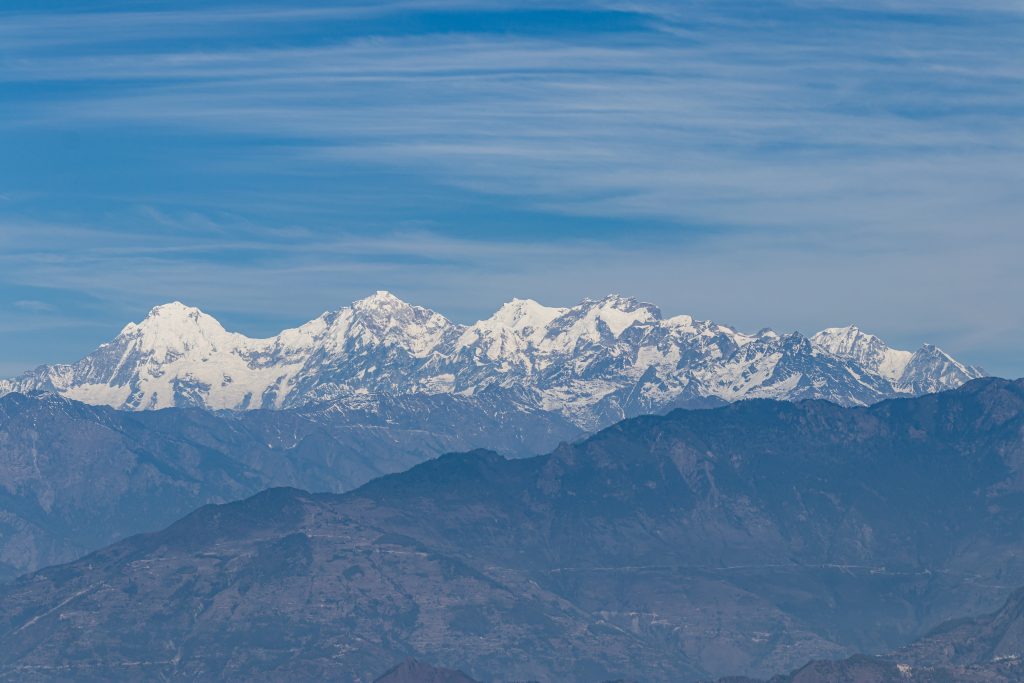
When you choose trekking in Nepal, you’re entering the land of giants. Out of the 14 peaks above 8,000 meters, eight are in Nepal. This includes Everest (8,848m), Kanchenjunga, Lhotse, and Makalu. These towering mountains create some of the most dramatic landscapes on Earth.

The trails wind through lush forests, alpine meadows, and glacial valleys. Whether you want an easy hike or a month-long expedition, Nepal has something for everyone. Many trekkers dream of taking on the Poon Hill Trek, which is one of the most iconic adventures in the world.

Popular Trekking Routes in Nepal

Some of the most famous trekking routes include:

  • Everest Base Camp Trek – A 12–14 day journey to the base of the world’s highest mountain.

  • Annapurna Circuit – Famous for its cultural diversity and landscapes that change from tropical forests to snowy passes.

  • Langtang Valley Trek – A shorter trek offering beautiful scenery and rich Tamang culture.

  • Manaslu Circuit – A less crowded but equally stunning alternative to Annapurna.

Each trail gives trekkers a chance to experience not only nature but also the warm hospitality of Nepalese people.

Adventure Beyond Trekking

Trekking in Nepal isn’t just about walking trails—it’s about adventure in every form. Travelers can go mountain biking, rock climbing, or try white-water rafting on Nepal’s raging rivers. For adrenaline seekers, bungee jumping from the world’s longest suspension footbridge is a must. These activities make Nepal a paradise for thrill lovers.

Culture and People You’ll Meet on the Way

Trekking is also a cultural journey. Along the trails, you’ll meet Sherpas, Gurungs, Tamangs, and other ethnic groups who welcome you with smiles. Teahouses in villages offer local food, warm beds, and conversations that give you insight into Nepalese traditions. Many trekkers say these human connections are just as valuable as the mountain views.

 Best Time for Trekking in Nepal

The best seasons are spring (March–May) and autumn (September–November). In spring, rhododendron forests bloom, while autumn offers crystal-clear skies with stunning mountain views. Winter and monsoon are less favorable, but adventurous trekkers still attempt certain trails.

 Tips for First-Time Trekkers

If it’s your first time trekking in Nepal, here are some tips:

  • Hire a local guide or porter for safety and support.

  • Carry proper trekking gear, including warm clothes and sturdy boots.

  • Stay hydrated and acclimatize to avoid altitude sickness.

  • Respect local culture and traditions.

  • Always get travel insurance that covers trekking above 3,000 meters.

Conclusion

Trekking in Nepal is not just a trip—it’s a life-changing experience. From the towering Himalayas to cultural encounters and thrilling adventures, every step brings new stories. Whether you’re aiming for Everest Base Camp or exploring hidden trails, Nepal will leave you with memories that last forever.

So pack your boots, take a deep breath, and get ready for an adventure like no other. Nepal is waiting for you.

Hiking Paradise.

Nepal is a country that offers you multitudes of possibilities in many different areas of travel. One such is Hiking. Walking for hours and hours to reach a particular destination is just…hmmm…how do I explain it…it’s more than just worth it.

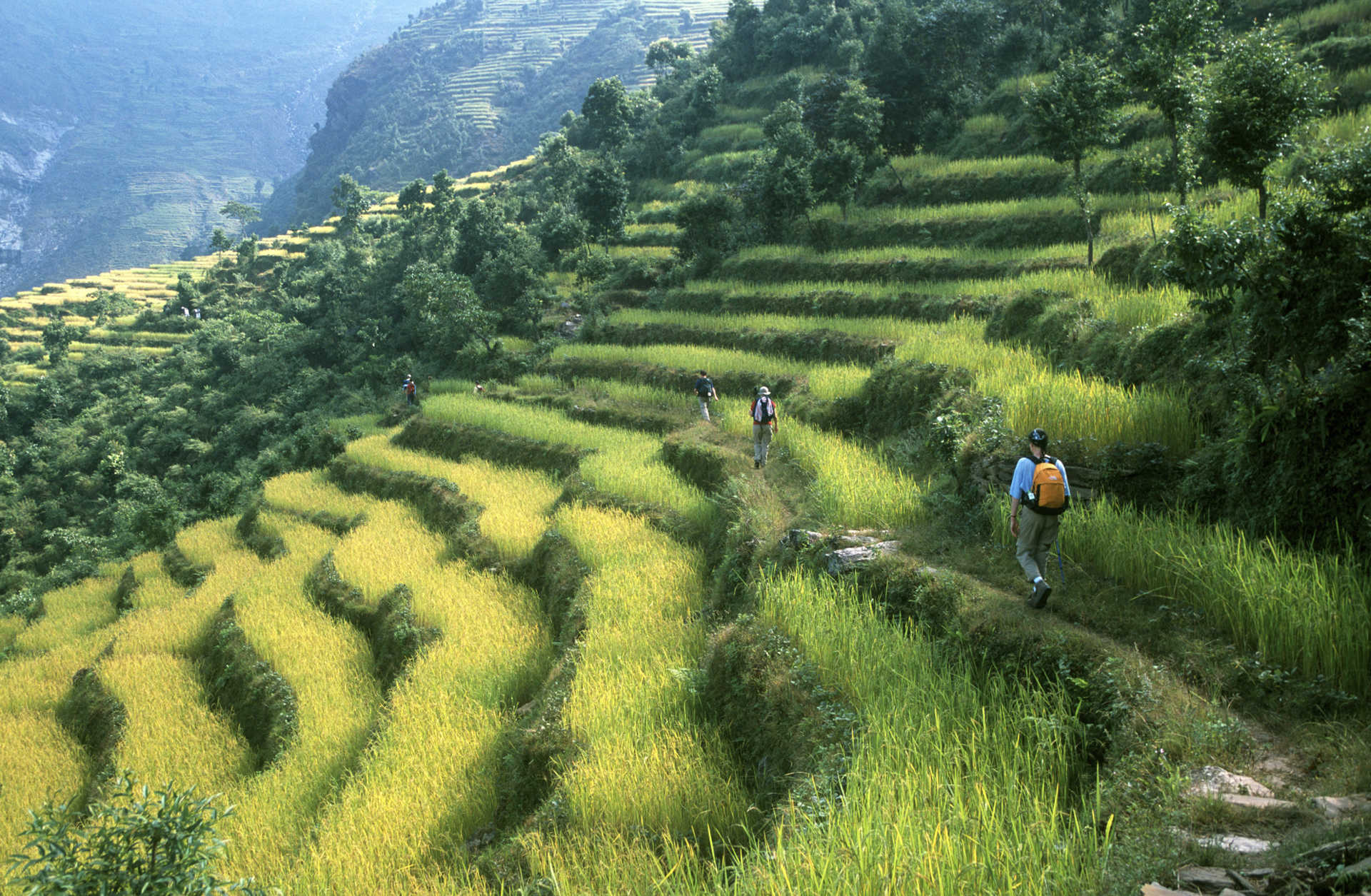
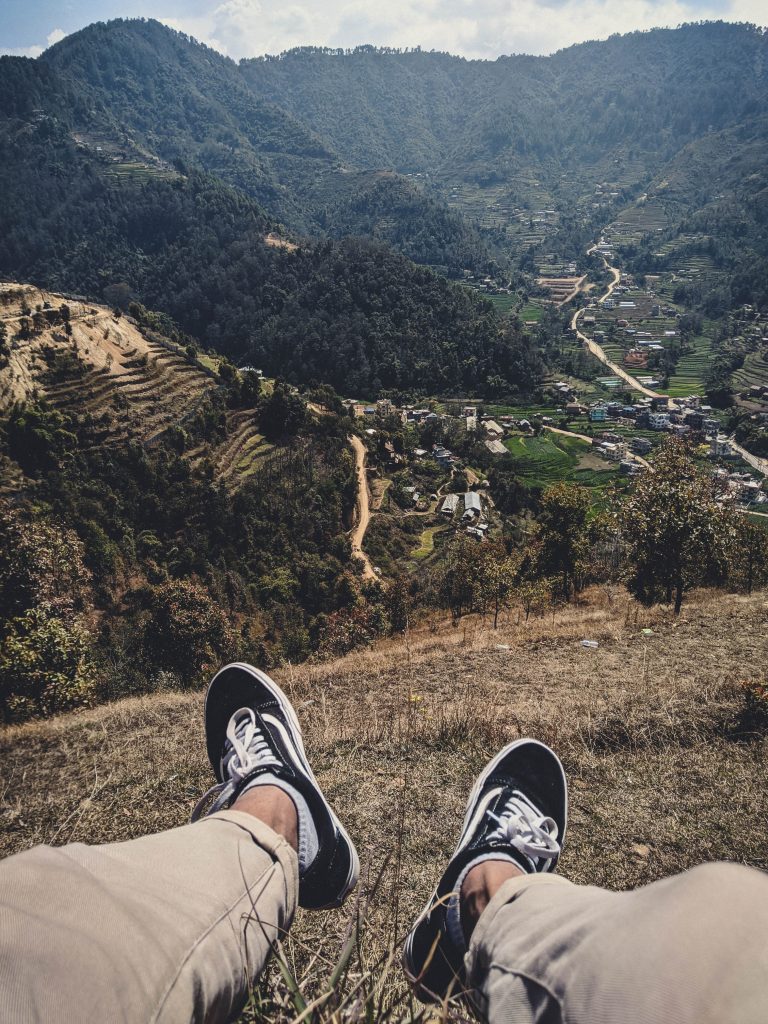
Nepal is home to some of the most beautiful scenery in the world. With its diverse landscapes and breathtaking views, it’s no wonder that hiking is one of the most popular activities for travellers in Nepal. It is also one of the most rewarding activities you can do in Nepal whether you are someone from another country or Nepal. Just find yourself in some beautiful scenery enjoying the natural pleasure of hiking through the mountains which you have well-deserved with hours and hours of rigorous walking. The feeling while you navigate through the misty woods of lush green forests of the hills of Nepal, is just incomprehensible on any scale of things.

Hiking is one of the best ways to escape the hustle and bustle of the city streets. To be able to take a break from the busyness and immerse yourself in the natural pleasure is one of the best activities to do at the weekends too.

There are many options for where you can go hiking in Nepal be it for short distances or long ones. Popular short hiking routes are especially located in Kathmandu and the long ones are mainly towards the west. Most of the hiking routes are located in the hilly region of Nepal thus, in the central belt that extends from the western border to the eastern one.

We, as a travel agency aim for you to get an unforgettable experience and a lifelong memory that you can cherish forever and share with your loved ones. 

The flora in the hilly region of Nepal is covered with subtropical forests in the lower altitudes and coniferous trees intermixed with temperate grasslands in the relatively higher altitudes. The valleys are very fertile however, they are low in production quantity due to high population density. The hilly region of Nepal covers about 68% of the total area and the Himalayan region which is in the northern part extending from the western border to the eastern one covers about 15% of the area. All of the hiking routes which we will be presenting to you are from these regions. The Himalayan region has coniferous vegetation and is a very infertile area. The fauna found in the hilly and Himalayan region is comprised of animals like tigers, bears, snow leopards, red pandas, Himalayan tahr, musk deer, wild boars etc. Lophophorous(Danphe), also the national bird of Nepal, is found in the hilly region. 

Most common hiking spots in Nepal: 

Shivapuri: Located in the northern hills of Kathmandu lies a beautiful national park with a great variety of animals and birds and a fantastic location with the best views of Kathmandu. The place also has good accommodation facilities. Shivapuri is incredibly loved by people from Nepal or outside Nepal. The waterfalls and the lush forest amidst the soulful bird chirpings would just set your mood up for a long walk. The place might require fees for access to some places so better not to go without anything. The routes are also around army conservation areas so you might spot some army personnel.
Highest elevation: 2732 metres (~8963.25)
Accommodation: A variety of hotels and restaurants 

Champadevi: Not so far in the southeast direction from Kathmandu city lies a hiking trail with a perfect blend of a peaceful retreat as well as a nature lover’s walk. The trails are well managed and have the perfect atmosphere that can make you enchanted within itself. The maximum elevation is 2278 metres(~7473.7 feet) thus you elevate about 880 metres(2887.1) more than Kathmandu’s average elevation. You will encounter some caves, colourful trees, a beautiful view of Kathmandu Valley and many more. Even though the place has lush green trees, it has no water resources since it is believed that the god of heaven, Indra who is also associated with water in Hindu mythology cursed the place with no water resources because he lost his dog due to the sound of streams and other water bodies.
Highest elevation: 2278 metres (~7473.7 feet)
Accommodation: Not readily available 

Phulchowki: The highest of the hills of Kathmandu Valley that has mysterious jungle routes and a place “full of flowers” which is even projected in its name, Phulchowki (meaning: full of flowers) consists of a hiking trail loved by many. It has been described as feeling like it’s out of a fantasy tale—full of flowers and dense forests, it’s difficult to find a path that goes all the way to the top. If you’re looking for an escape from the city, this is the place to go! The route up the hill is long and tiring, but it’s well worth it when you see what lies at its peak: a panoramic view of Kathmandu and the beautiful mountains. Your day will be extremely worth it and you will be missing out if you don’t visit this place.
Highest elevation: 2,762 metres(~9061.68 feet)
Accommodation: Available nearby

Suryachaur: Located in the historically rich district of Nuwakot with an elevation of 2100 metres(~6990 feet) lies a motorable location with an enjoyable hike route leading us to a place that has the best views of the Langtang mountain range and even Mount Everest!!! The route is extremely enjoyable with waterfalls and nature’s perfect touch. The top of the hill is also a route to another enjoyable destination known as Kakani. You get to surround yourself with an oasis of dense forests, and unexplored locations nearby. You also get to see a flawless and highly lovable view of the Trishuli River and Likhu Valley. This place is ideal for mountain biking, motorcycle ride, weekend retreat, family visit, nature retreats, night sky stargazing, camping, and almost anything you can think of. You can also pay a visit to the famous Jhor waterfall en route to Suryachaur. This hill station is one of the best places to visit in Kathmandu and you shouldn’t miss it.
Highest elevation: 1970 metres (~6460 feet)
Accommodation: Not readily available 

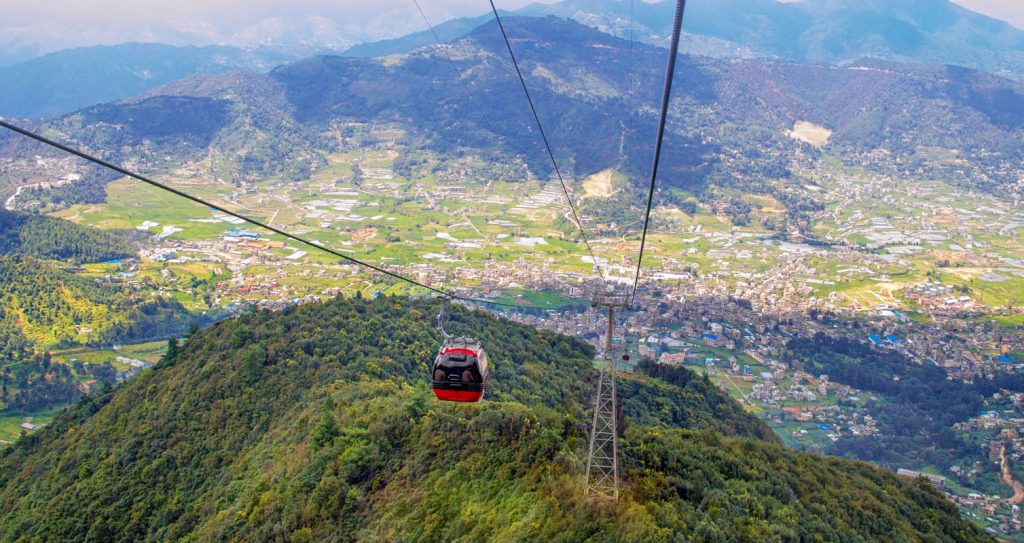
Chandragiri: With technological advancements, convenience increases however, you can’t take away the enjoyment of difficulty and the thrill of certain things. For example, auto gears might be convenient but you can’t disagree that manual gear shifts are fun to ride. Likewise, Chandragiri as of now is accessible by cable car but the hiking routes are still just as enjoyable as it was before. King Prithvi Narayan Shah (the first and the unifying king of Nepal)  scouted Kathmandu Valley from Chandragiri Hill before attacking Kathmandu Valley. With one of the highest altitudes among the hills in Kathmandu Valley, it’s no surprise that the scenery is going to be perfect. On a clear day, you can see mountain ranges like the Langtang range, Gaurishankar, Ganesh, Manaslu and many more. The walk is long and might even cover your leg day on your vacation but it is very worth it and you should try it.
Highest elevation: 2551 metres (8369.4 feet)
Accommodation: Available 

Nagarjun: A relatively underrated hiking route, this place offers you multiple unexplored places. From many sanctuaries in a single place to an almost empty view tower, this place is unknown to many people as a hiking route however, is probably one of the best you can get. This place is a collection of hills located 7 km west of the city of Kathmandu. The highest point contains a monastery named Jamacho Gumba which is a beautiful location overlooking Kathmandu Valley. The Jamacho Gumba hike starts from Shivapuri national park’s gates and goes all the way to the Nagarjuna hilltop. The forest is extremely dense and you might encounter some exotic birds and animals. Another nearby location in the Nagarjun area is accessible through a different location. One such is the white gumba which starts from Shwayambhu and is in a completely different location from the starting point of the Jamacho Gumba hike. There are many small locations around the Nagarjun Hills area which are also perfect for simple morning and evening walks.
Highest elevation: 2095 metres (~6870 feet)
Accommodation: Not available 

Ghyampe Danda and Pilot Baba ashram: Located on the southwestern side of the Bhaktapur district lies a motorable location among the green trees which is also a great location to be on foot. It is perfect for light-hike since the elevation is less however the view from there, especially of the mountains is indeed immaculate. Moreover, the grasslands and small water bodies are just perfect for a peaceful visit. Beautiful farms of Bhaktapur, the deep calm of the rushing chaotic city, and greenery all around will be under your site from this place. This place is ideal for those who are searching for a short chilled-out weekend. Even with a relatively less elevation, you will be able to surround yourself with an unexplainable view of Kathmandu Valley. 
Highest elevation: 2000 metres (~6560 feet)
Accommodation: Available

NEPAL AFTER COVID – A SPIRITUAL HEALING

Nepal is a beautiful country located in South Asia with diverse landscapes, rich culture and friendly people. From the world’s highest mountain peak Mt. Everest to the deepest gorge Kali Gandaki Gorge, Nepal has it all! It offers plenty of opportunities for travelers to explore its majestic mountains, lush jungles, and vibrant cities. From trekking in the Himalayas to exploring ancient temples and monuments, Nepal has something for everyone.

Whether you are looking for adventure or relaxation, Nepal has something for everyone. You can go on a jungle safari in Chitwan National Park or take a spiritual journey to Lumbinithe birthplace of Lord Buddha. There are also many cultural sites like Kathmandu Durbar Square that will give you an insight into Nepalese history and culture. It is the kingdom for the people who are passionate about mountaineering. 

According to recent data, the past three months have seen a drastic rise in foreign tourists entering the country. On average, around 49,000 foreign tourists per month entered Nepal in the 11 months of 2022. According to Maniraj Lamichhane, Director of Nepal Tourism Board, the United Nations World Tourism Organization (UNWTO) estimated that 2023 would see a revival in tourist arrivals somewhere between 60 to 63 percent of the world compared to 2019. Many famous travel websites have made an argument that Nepal is one of the best destinations to gain self-healing. When the world was fighting against COVID, the prince of Bahrain, Sheikh Nasser bin Hamad Al Khalifa, came to climb Mount Everest in March 2021. 

It’s only after COVID, Nepal welcomed many well-known Personalities from across the globe. From the man behind the famous Discovery TV show “Man Vs Wild”, Bear Grylls to the famous film actor Jet Li has visited Nepal. Bear Grylls skydive from the Everest Region, which creates an international buzz in Adventure Tourism Market. One of the top directors of Bollywood, Sooraj Barjatya came along with his team for the film Unchai, which includes Boman Irani, Anupam Kher, and Parineeti Chopra. These actors were actively involved in social media to promote the beauty of Nepal. Finalists of BBC Master Chef also came to Nepal and promoted Nepali food. In the recent few months, more than 20 famous Youtubers also came to Nepal, they posted and promote the beauty of different places across Nepal. 

WHY TO TRAVEL NEPAL?

Nepal is home to some of the most stunning natural landscapes in the world, including the Himalayas, which contain 8 of the world’s 10 highest peaks. A paradise for adventure seekers, with a wide range of outdoor activities available including trekking, climbing, rafting, and paragliding, it is a land with ancient culture and history, with a rich and diverse heritage that is reflected in its art, architecture, and religious traditions. Nepal is home to many unique architectural styles, including traditional Newari architecture in the Kathmandu Valley and Tibetan-influenced architecture in the Himalayan regions. 

Nepal, the name itself is known for “Never Ending Peace and Love” and it is believed that Nepal is one of the best destinations to find inner peace. Nepal is home to many important religious sites for Hindus and Buddhists, making it a popular destination for spiritual pilgrimages. It is a great destination for travelers interested in wellness, with a range of options available including yoga retreats, meditation centers, and natural hot springs. 

Nepalese people are known for their warm and welcoming nature, and travelers to Nepal are often struck by the friendliness and hospitality of the local people. Staying with a local Nepali family in a homestay is a great way to immerse yourself in the culture and learn more about daily life in Nepal. Nepali cuisine is a unique blend of Indian and Tibetan flavors and is known for its delicious and hearty dishes such as Dal Bhat and MOMO. It is a relatively affordable destination, especially compared to other countries in the region, making it a great value for travelers on a budget. 

Nepal is a great destination for travelers who are interested in volunteering and giving back to the local community. There are many organizations that offer opportunities to work on projects ranging from education and healthcare to environmental conservation. Nepal is still relatively undiscovered by tourists compared to other countries in the region, making it a great destination for travelers looking to get off the beaten path and experience something truly unique. 


The world was shut down for almost 2 years due to the pandemic. Everyone was forced to get locked inside the four walls, being bored and depressed. Nepal has a lot to offer for everyone, one should definitely visit Nepal for “Once in a Lifetime Experience”