25 Essential Nepali Language Words and Phrases Every Traveler Must Know for the Best Experience in Nepal
April 18, 2023
Nepali Language Words and Phrases – An Introduction
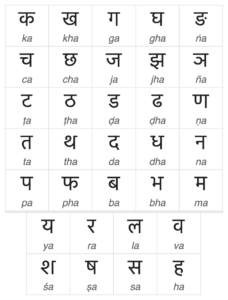
Nepali Language Words and Phrases are an essential part of connecting with the culture and people of Nepal. The Nepali language, written in the Devanagari script, is the official language of Nepal and is spoken by the majority of its population. It belongs to the Indo-European language family and traces its roots to “Khas Bhasha.” Adopted as the official language of the Gorkha kingdom in the 18th century, it continues to serve as a unifying tongue among Nepal’s 120+ ethnic groups.
While English is common in tourist hubs, government offices, and among the younger generation, learning a few Nepali language words and phrases can go a long way. A small effort to greet someone in their language builds trust, eases travel, and enriches your cultural experience.
Nepali Language
Why Learn Nepali as a Traveler?
Using even simple Nepali words and phrases creates meaningful interactions. A heartfelt “Namaste” with palms together is more than a greeting, it’s a gesture of deep respect, meaning “I salute the God in you.”
Locals greatly appreciate when foreigners try speaking Nepali. Nepali language words and phrases helps break barriers, makes navigation easier, and leaves you with memorable travel moments. For more details about the Nepali writing system and pronunciation, you can also explore the Nepali Language Guide on Omniglot
Common Nepali Language Words and Phrases for Travelers
Here are some useful Nepali words and phrases for travelers:
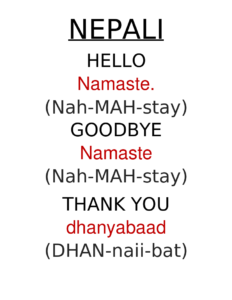
Hello – Namaste (said with palms pressed together and it means; “I salute the God in you”)
| English |
Nepali |
| Thank You |
Dhanyavād |
| Yes |
Ho |
| No |
Hoina |
| Food |
Khana |
| Rice and lentils |
Daal Bhat |
| Tasty |
Mitho |
| It’s tasty |
Mitho Chha |
| Tea |
Chiya |
| Fruit |
Phalphul |
| Meat |
Masu |
| Bread |
Roti |
| Milk |
Dudh |
| Water |
Pani |
| Pani |
Khane pani |
| Clean |
Safa |
| Dirty |
Phohor |
| Father |
Buwa |
| Mother |
Ama |
| Elder sister |
Didi |
| Younger sister |
Bahini |
| Elder brother |
Dai |
| Younger brother |
Bhai |
| Friend |
Sati |
| What is your name? |
Tapaiko nam ke ho? |
| Work |
Kam |
| Flower |
Phul |
| Medicine |
Ausaudhi |
| River |
Khola |
| Mountain |
Himal |
| Lake |
Tall |
| Cold |
Chiso |
| Hot |
Tato |
| Good |
Ramro |
| Beautiful |
Ramro |
| Long |
Lamo |
| Short |
Choto |
| Inside |
Bhitra |
| Outside |
Bahira |
| Where? |
Kaha? |
| Which? |
Kun? |
| Now |
Ahile |
| Morning |
Bihana |
| Night |
Rati |
| What time is it? |
Kati bajyo? |
| Slow |
Bistarai |
| Fast |
Chhito |
| Enough |
Pugiyo |
| Where is the toilet? |
Toilet kahan chha? |
| Where can I stay? |
Kahan Basne? |
| Please sit down |
Basnos |
| Where are you coming from? |
Kahan bata aayeko? |
| Which country are you from? |
Kun desh bata aayeko? |
| I am travelling alone |
Ma ekklai janchhu |
| Allright |
Hunchha |
| Expensive |
Mahango |
| Altogether, how much is it? |
Jamma kati bhayo? |
| I like Nepal |
Malai Nepal man parcha |
| I like you |
Malai timi man parcha |
| May I please take a photo of you? |
Tapaiko photo khichau |
| I am sick |
Ma birami chhu |
| Where is there a hospital? |
Hospital kaha chha? |
| Sunday |
Aaitabar |
| Monday |
Sombar |
| Tuesday |
Mangalbar |
| Wednesday |
Budhabar |
| Thursday |
Bihibar |
| Friday |
Sukrabar |
| Saturday |
Sanibar |